
Biopolymer removal
Someone injected you with something years ago.
You may have been told it was “hyaluronic acid,” “collagen,” “an imported product,” or simply “a filler.” Now there’s pain, or hardening, or the volume has moved somewhere it shouldn’t be, and for a long time you haven’t found anyone who can tell you clearly what’s inside you and what can be done. About twenty years ago, there was an explosion in Colombia of substances injected to enlarge the buttocks, and many of those substances were biopolymers. They’ve caused a serious health problem, and many of the people affected don’t even know they were injected with them. This page isn’t going to promise you that everything can be removed. I say the opposite myself, and that sentence is below, unsoftened.
- This isn’t cosmetic surgery: it’s reconstructive.
- The inflammation that looks like a good result is the disease.
- I can’t promise to remove all of it, and it’s almost never a single surgery.
Tell me what you were injected with and when. That's where we start.
Dr. Saad or his team will reply. No commitment.
Let's start with the name, because the name is already part of the deception
“Biopolymer” sounds like something biological, compatible, almost natural. It’s a misleading name. Behind it is a synthetic product, almost always petroleum-based: liquid or non-medical-grade silicones, oils, or methacrylate, a product used in dentistry to make molds, which should never be injected into a person or an animal.
The vast majority of them are a plastic, and as a plastic, a material foreign to the body, they’re incompatible with the human body. None of these substances should ever be used for cosmetic purposes.
And who injected you matters too. It’s almost always people without medical training: not doctors, not specialists in aesthetic medicine. That has a technical consequence that shapes the surgery for me: the substance is injected at different depths and with no anatomical logic, so the internal damage is uneven, and there’s no orderly layer to remove it from later.
What you have has a name
It’s called iatrogenic allogenosis.
Allogenosis, because the material is foreign to your body. Iatrogenic, because the harm was caused by someone else. It’s written exactly that way, in those words, in the document you’ll sign before surgery.
I say this because that word changes the conversation: it wasn’t a foolish decision on your part. Someone injected you with something they shouldn’t have.
And for the same reason, this isn’t a cosmetic procedure: it’s a reconstructive one.
Why you liked it at first, and why that was the problem
Because it’s a foreign substance, your body reacts right away with inflammation. In the buttocks, that inflammation does something very specific and very fast: the area becomes firm, looks rounder, and gets bigger on the spot.
And people like that effect.
- What many people took for a good result was the inflammatory process.
It wasn’t volume: it was your body defending itself. And because the immediate result was pleasing, many went back for more.
Over time, that same reaction is what causes the problem: your immune system recognizes the material as a foreign body and will always reject it. That’s where the pain, hardening, deformity, abscesses, and infections come from. And not only where it was injected: the damage is both local and systemic, and it can affect joints far away or other organs.
-
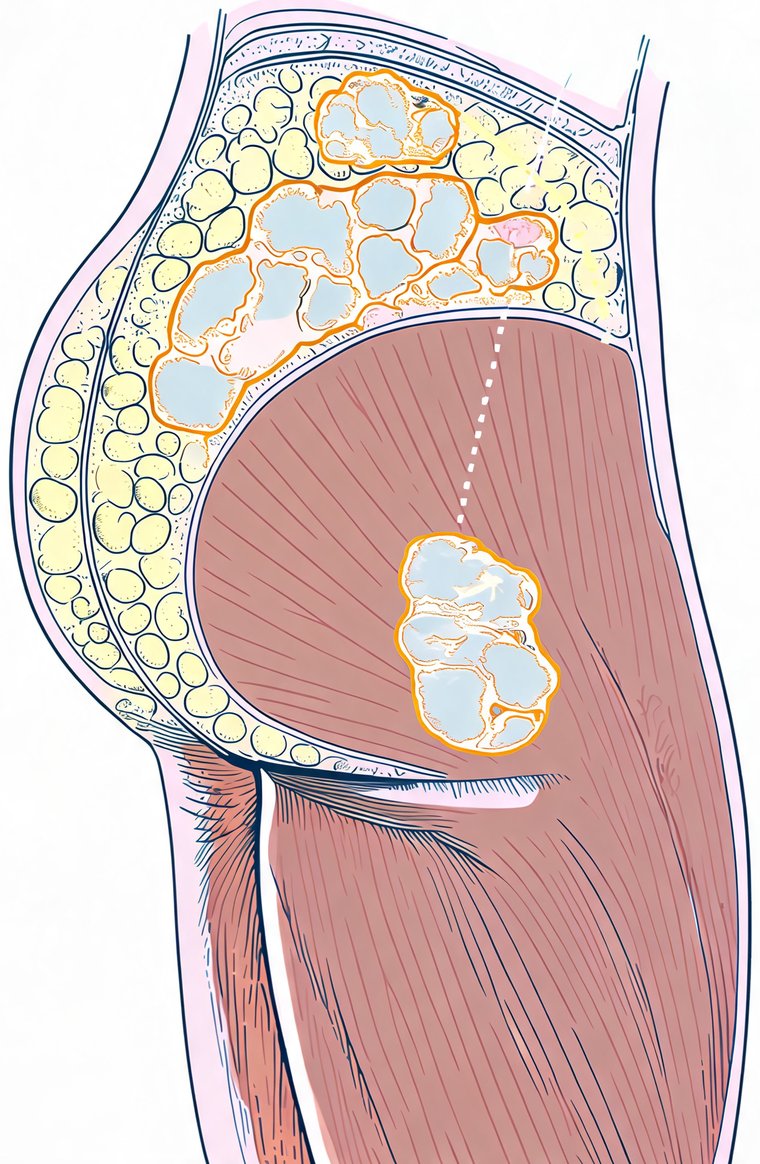
The material (in grey) sits in the fat and sometimes reaches the muscle. In gold, what I remove.
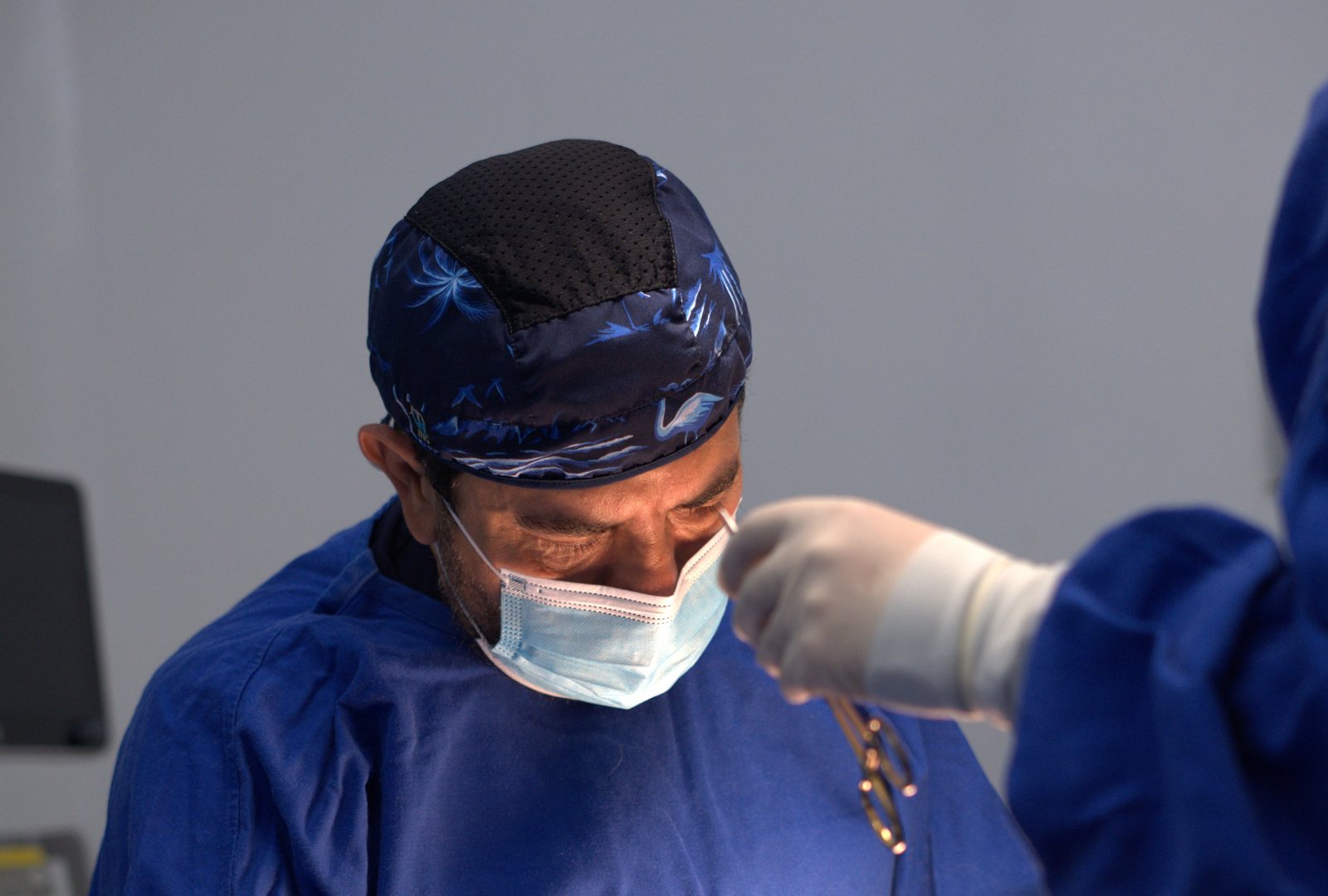
Why it’s better not to wait
You don’t know when the problem will flare up in your body. It could be in 5 years, 10, or 20.
The fact that nothing hurts today doesn’t mean nothing is happening: the reaction starts on day one and gets worse over time. That’s why, when people ask me when they should have them removed, my answer doesn’t change: the time is now. The sooner they come out, the less damage builds up. And it’s better to remove them when symptoms are just starting, before the material hardens.
How I do it
First, removal. Taking out as much of the substance as possible, with an orderly, safe procedure. Removing it is what stops the reaction: as long as it’s inside, your body keeps fighting it. The only technique that has proven effective is open surgery, removing the material in a single block.
Then, reconstruction. Giving the area a natural shape again with the tissue that remains. This isn’t an extra: it’s the other half of the surgery. Taking something out of the body leaves a gap, and that gap has to be dealt with too. In the same surgery, I reconstruct using only flaps, rotating nearby tissue. Refining the shape with your own fat (fat transfer) comes later, at least 3 months later.
And it isn’t a single surgery. What we do first is literally called the “first surgical stage”: this procedure isn’t done as a single operation, but in stages.
In medical terms, in case you want to compare notes with your own surgeon Reconstructive surgery for the partial correction of iatrogenic allogenosis. The stated goal is partial correction: not ending up completely free of biopolymers, because that isn’t an achievable goal.
Not sure what you were injected with, or when? That's where we start: tell me whatever you remember.
Tell me what you were injected with How the buttocks look afterward →
Where I operate
I see you for consultations in my office in Cali, and I operate in a clinic. I don’t do any procedure in my office, not even a minor one: it’s for consultations, so I can explain everything calmly before you decide.
I operate in a fourth-level clinic —the highest level of care in Colombia’s health system— with full medical services: inpatient care, emergency, and intensive care. The operating room is certified by the regional Health Department.
I also operate in Pereira, in a clinic of the same level.
What I won't promise you

That all of it comes out. I remove as much as possible, and there will always be some defect left after these products are removed. If someone tells you you’ll look as if nothing ever happened, they’re not describing this surgery.
A percentage. Not even “somewhere between X and Y percent.” What proportion is realistic in your case is something I can only tell you after seeing you.
That it’s a one-time thing. As I said above: it’s done in stages.
And one more thing I’d rather tell you now: these substances migrate. They travel through the blood vessels and the lymphatic system, and they can affect tissues, organs, or body systems far from where they were injected. There’s no way to determine whether small amounts are lodged elsewhere in your body, and surgery doesn’t prevent future migration either.
And what this surgery doesn’t fix: sagging skin, contour irregularities, cellulite, stretch marks, changes in skin color, and skin aging. They’re on the list of things my own consent form excludes, and I’d rather you know that before, not after.
“The best candidate for this reconstruction is someone looking for improvement, not perfection.” — from my informed consent form (translated from Spanish)
And what risks the surgery carries
All of this is in the consent form you’ll sign. I’m telling you here so you can read it calmly at home and arrive at the consultation knowing what to ask.
There may be bleeding and bruising, fluid buildup, or an infection, which sometimes reaches deep tissue. Where the material had already damaged the tissue, some areas of skin or fat may not heal well and may be lost (necrosis). Sensation in the area can also change, and the scars can end up wide or visible. And the risks of any surgery, which are uncommon: reactions to medications and anesthesia, blood clots that travel to the lungs, and, in very rare cases, complications that can be life-threatening.
If you smoke, the risk of healing problems and skin loss goes up.
If there’s a complication. You may need another surgery or medical treatment, and those costs are paid by the patient.
You may need another surgery or medical treatment, and those costs are paid by the patient. In Colombia, public health insurance doesn’t cover cosmetic surgery or its complications; that’s why there are specific insurance policies that cover up to 30 days after surgery.
If any of this worries you, that's exactly what we should talk about before you decide — not after.
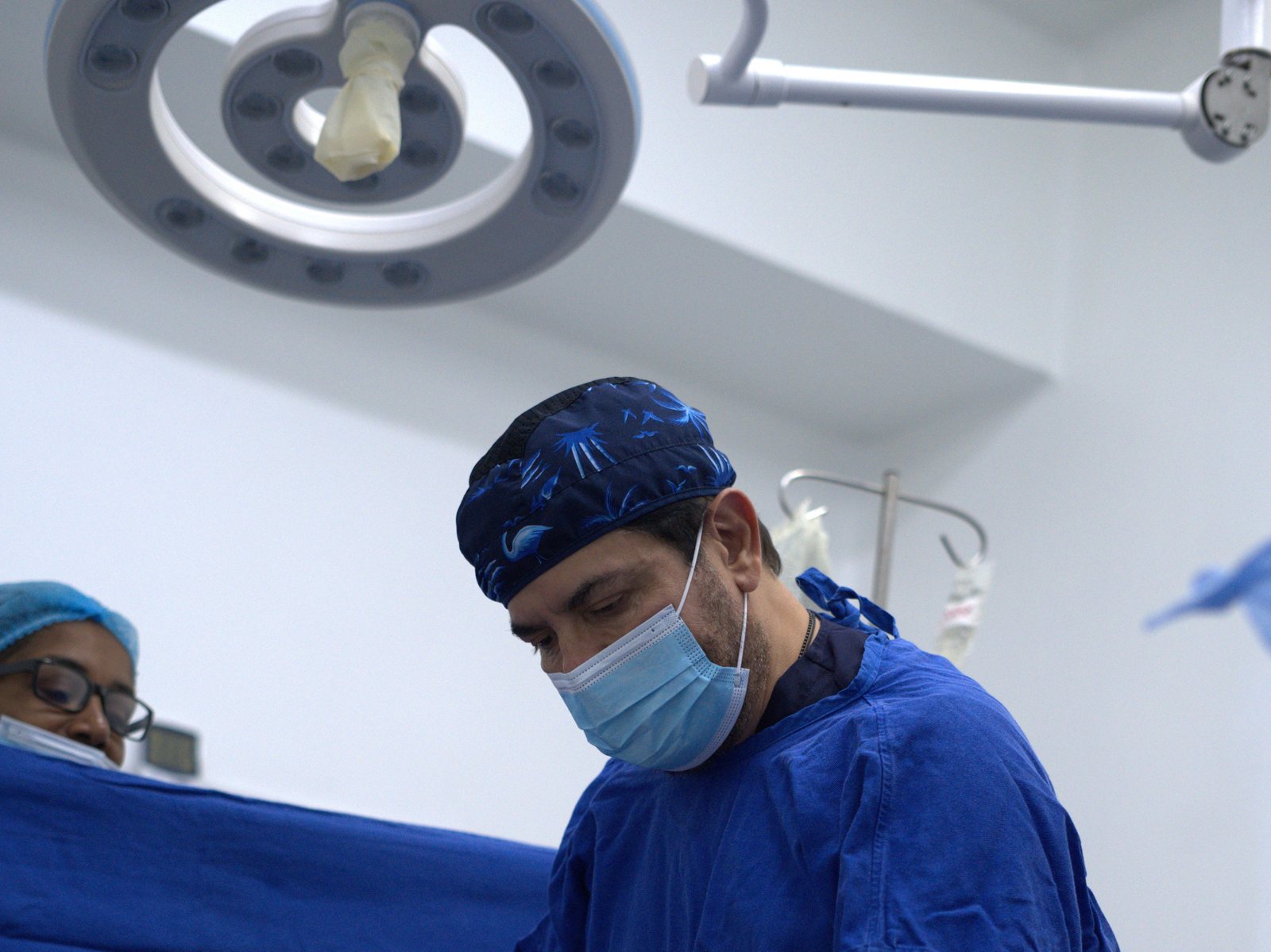
Before surgery
- The consultation.
It’s a real conversation: we go over your history and need to piece together what you were injected with, when, where, and how many times. And if you don’t know, that’s fine too. You don’t need to arrive with a diagnosis: you can come with a suspicion.
- A recent MRI.
You need to bring an MRI to the consultation that’s no more than 4 months old.
- Lab tests
To make sure everything is in order before the procedure.
- Your habits.
Smoking affects healing.
What I need you to tell me
To assess you safely and recommend the best option for your case, I need to know all of your information:
- Previous surgeries, including implants or earlier procedures.
- Medications — everything you’re taking, including vitamins and supplements.
- Medical history: illnesses, allergies, or significant conditions.
- Tests and medical records. If you have previous results, bring them to the consultation.
When it comes to your health, no information is too small.
- You don’t need to know which surgery you need. That’s my job.
What does help is arriving knowing what bothers you and what you’d like to achieve: that’s how I understand your expectations and explain the options in your case.
Ask me everything —the procedure, the risks, recovery time, the results you can expect. There are no silly questions. If you’re an adult, you can bring someone with you to the consultation, though you don’t have to. If you’re a minor, you must come with a trusted companion.
Surgery shouldn’t be an impulse decision. Take all the time you need.
Recovery
- Here I’d rather leave the gap in plain sight than fill it in.
What I can tell you: planned surgery needs a planned recovery —a clean, suitable place to stay, someone to be with you, a balanced diet, plenty of fluids, and following prescriptions and follow-up visits. Pain is actively managed: there’s an anesthesiologist on the team dedicated to that during and after surgery. You’ll have drains in your buttocks for at least 10 days. Lymphatic drainage massages? It depends: if I do liposuction to reconstruct the buttocks, you’ll need them; if there’s no lipo, they’re not necessary. And you can sit down one month after surgery.
- If you’re coming from out of town: a minimum of one month in the city.
It’s a minimum: if you can stay longer, even better. Once that time is up, you can fly home.
Frequently asked questions
“Doctor, when should I have them removed?” The time is now.
The time is now. From the day they’re injected, and for as long as they stay inside, the reaction continues.
I don’t have any symptoms. Can I wait? No.
No. No symptoms doesn’t mean no problem: it can show up in 5, 10, or 20 years. And it’s better to remove them when symptoms are just starting, before the material hardens.
I’m not sure what I was injected with. Can I still come in? Yes.
Yes. Much of what I publish about this is aimed precisely at people who don’t know what they were injected with, or don’t even know they were injected with anything.
My joints hurt and I’m always tired. Will that get better? In general, improvement in those symptoms elsewhere in the body starts to show after about 3 months.
In general, improvement in those symptoms elsewhere in the body starts to show after about 3 months.
When can I sit down? One month after surgery.
One month after surgery.
Can all of it be removed? No.
No. As much as possible is removed, and there will always be some defect left. Anyone who tells you otherwise is selling you something.
Can any aesthetic doctor do it? No.
No. The removal must always be done by a plastic surgery specialist, with an orderly, safe procedure and the right technique. In Colombia, this specialty takes at least four years at universities and teaching hospitals, with certification from the Ministry of Education and registration in RETHUS, the national registry of health professionals. Mine can be checked, and I encourage you to do so.
The information on this page is educational and does not replace an in-person medical consultation. No result is guaranteed: what can be achieved in your case, and its risks, are discussed in consultation and set out in the informed consent form you sign before surgery.